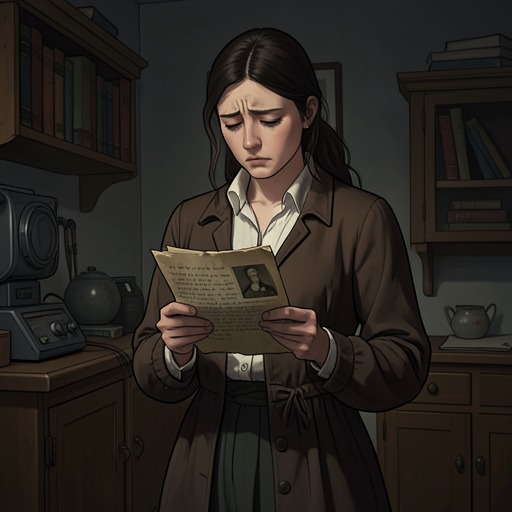
Mme. Couture
Père GoriotMme. Couture is a widow of limited means whose care for the disowned Victorine Taillefer gives the young woman a home, a maternal protector, and a witness to her father’s refusals. At the Maison Vauquer, she makes repeated visits with Victorine to M. Taillefer, supporting her ward’s appeal even when it brings no material help. Her kindness stands against the wealth and authority that keep Victorine excluded from her own family.
Identity and Circumstances
Mme. Couture is the widow of a commissary-general who served the Republic. She occupies rooms on the first floor of the Maison Vauquer with Victorine, who pays eighteen hundred francs a year for their accommodation. The arrangement places the two women among the boarding house’s more respectable residents, but it does not signify wealth: Mme. Couture has only her jointure and widow’s pension, and the narrator notes that she may one day have to leave her inexperienced ward to face the world alone.
Her financial vulnerability shapes the urgency of her guardianship. She has taken responsibility for a girl who has been denied acknowledgment and inheritance by her father, while possessing no fortune with which to secure Victorine’s future. In this setting, care is both intimate and precarious: Mme. Couture can accompany and console her ward, but she cannot compel the family or provide the dowry that society makes consequential to a young woman’s prospects.
Guardian to Victorine
Mme. Couture is a near relation of Victorine’s mother. After Victorine’s mother died broken-hearted in her house, Mme. Couture took the orphan in and filled a maternal role. She brings Victorine to mass every Sunday and to confession once a fortnight, hoping that religious devotion will help prepare the girl for an uncertain future. The novel presents religion as a resource available to the young woman when neither family recognition nor financial independence is forthcoming.
That devotion does not make Victorine’s hopes abstract. She loves the father who refuses to acknowledge her and tries once each year to see him, carrying her dead mother’s message of forgiveness. Mme. Couture shares those visits and their repeated disappointment. Victorine’s brother has not visited for four years and sends no assistance; Mme. Couture cannot repair that estrangement, but she refuses to leave the girl to endure its consequences alone.
The Annual Appeal
The visits to M. Taillefer expose the disparity between Victorine’s gentle persistence and her father’s deliberate rejection. On the morning of one such visit, Mme. Couture and her ward first go to say their prayers at Saint-Etienne du Mont. Mme. Couture tells the other residents that it is the day they must see M. Taillefer and observes that Victorine is trembling. Prayer precedes the appeal, but it does not soften the father’s response.
When Mme. Couture later recounts the encounter, she describes M. Taillefer’s controlled cruelty: he does not invite Victorine to sit, tells them to stop coming, and refuses even to call the girl his daughter. He argues that Victorine’s mother brought nothing to the marriage and that Victorine therefore should expect nothing from him. Victorine kneels before him, explains that she persists for her mother’s sake, promises obedience, and offers her mother’s farewell letter. Her father takes the letter, places it on the mantelpiece, and turns back to cutting his nails. Although he reaches out as if to raise his daughter, Victorine covers his hands with kisses and he withdraws them. Mme. Couture’s account makes her the scene’s indispensable witness: the visit is not merely unsuccessful but a sharply enacted refusal of kinship and compassion.
Mme. Couture’s anger gives voice to a judgment Victorine will not make. She and Mme. Vauquer exhaust their vocabulary of abuse against the banker, while Victorine continues to pray that her father’s eyes will be opened and her brother’s heart softened, without accusation. The contrast defines Mme. Couture’s role: she protests the injustice around her ward while protecting the girl’s gentler, forgiving attachment from being mistaken for consent to the treatment she receives.
Care Within the Boarding House
The other residents become an informal audience to Victorine’s family ordeal. After the failed visit, Mme. Couture recounts its details in the shared dining-room, where the response is immediate condemnation; Father Goriot calls the family inhuman. Mme. Couture’s testimony turns an event that Victorine might otherwise bear privately into a communal recognition of the harm done to her.
Her protectiveness also appears in smaller acts of care. When Victorine expresses concern that Eugène de Rastignac may be ill, Mme. Couture tells her to stop and look after him. Later, when he falls asleep with his head on Victorine’s shoulder, Mme. Couture squeezes her hand and observes the happiness in the girl’s face. Victorine strokes Eugène’s hair and explains that he had only taken two glasses; Mme. Couture answers that his drowsiness does him credit. The moment shows her attending not only to Victorine’s distress but also to the new, innocent pleasure she finds in caring for someone.
This tenderness remains bounded by caution. When Mme. Couture and Victorine encounter the commotion around Vautrin and Eugène outside among the artichokes, Mme. Couture says they must go upstairs because it is none of their business. Her instinct is protective withdrawal, in contrast to the dangerous schemes unfolding around the lodgers. Yet when Victorine believes Eugène is unwell, she allows the girl to remain and care for him; her solicitude is not indifference to others, but a watchful effort to keep her ward safe.
Narrative Significance
Mme. Couture’s importance lies less in power to change Victorine’s circumstances than in her sustained presence within them. The father can withhold acknowledgment, money, and a hearing; Mme. Couture can accompany Victorine to the door, repeat the history of each rejection, and offer the domestic and religious care that her ward’s family denies her. Her poverty makes that support materially limited, but does not diminish its emotional force.
Through Mme. Couture, the novel places Victorine’s personal misfortune in a social world where a young woman’s future is bound up with paternal recognition and a dowry. Vautrin bluntly points to the practical disadvantage of having none, while Mme. Couture’s limited pension shows why benevolence alone cannot guarantee security. Against that pressure, she preserves a small counterforce: a household relationship in which Victorine is treated as a daughter, her grief is heard, and even her fragile happiness is met with tenderness.